


Rotten Tomatoes - Movies & TV
4.41.27K Reviews
App Specs
- Version
- 1.1.0
- Updated On
- License
- Free
- Downloads
- 100,000+
- Developer
- Fandango
- Categories
- Entertainment
- Platform
- Android
Screenshots
 Analysis by AppCompare
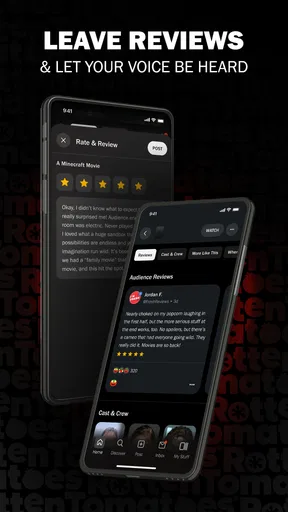
Choosing a movie and television companion app is usually less about finding another place to read scores and more about deciding how you want to choose what to watch. I spent time with Rotten Tomatoes - Movies & TV as an entertainment app from Fandango, and I found its appeal strongest when I wanted a quick sense of critical and audience reaction before committing to a film or series. It is free, aimed at a Teen audience, and built around reviews, social conversation, and news rather than acting as a complete streaming service.
That distinction matters. This is not the kind of app I would open expecting to press play on every title I discover. I would use it earlier in the process: when friends suggest a movie, when a new season appears in conversation, or when I am trying to narrow a long evening watchlist. Its store rating sits at 4.4 from around 4.5 thousand ratings, which suggests that the basic idea works well for many people, but the right choice still depends on whether you value editorial context more than a simple streaming catalogue.
How I would decide whether it belongs on your phone
I’d decide by giving the app a job that is narrow enough to judge: helping me choose what to watch, rather than becoming another feed I feel obliged to check. After a few real decisions, I’d ask whether its reviews and conversation changed my shortlist or simply added more scrolling. That habit test is what tells me whether it deserves a regular spot, and it leads naturally to the question of how its value holds up over time.
Start with the question you want answered
Before installing it, I would ask what kind of decision I make most often. If I regularly wonder whether a film is worth two hours, Rotten Tomatoes - Movies & TV is a natural fit. The service is designed around a recognizable review culture, so it can help me separate broad enthusiasm from a title that is merely receiving a lot of attention.
If my main question is “Where can I watch this right now?”, a streaming search tool may be more useful. If I want to maintain a private list of every film I have watched, a dedicated tracker may offer a more focused experience. Rotten Tomatoes sits between those needs: it gives discovery and opinion a central role, while also adding social and news elements for people who want to keep up with entertainment beyond one isolated title.
I also consider how much explanation I need. A single score is fast, but it can flatten a complicated reaction. A film may appeal to critics for reasons that do not match my taste, while a popular audience response may reflect expectations I do not share. The useful habit here is to treat the score as a starting signal, then read enough surrounding material to understand the mood behind it.
The everyday situation where it makes the most sense
Imagine that I am choosing a film for a small group on a Friday evening. One person wants something well reviewed, another dislikes slow dramas, and someone else has already rejected the most obvious blockbuster. Instead of opening several unrelated sources, I can use the app to check the title’s general reception, look for review context, and compare it with other possibilities. That does not remove the disagreement, but it gives the conversation a shared reference point.
Worth Reading Before You Choose

EA SPORTS FC Mobile 26 Is a Bigger Football Game, but It Takes Time

Flipboard Shows What News Apps Must Do Beyond the Feed

Switching to Android Auto Means Rethinking Your Driving Routine

Google Calendar Makes a Crowded Week Easier to Manage

Ludo King Makes the Most of the Minutes Between Plans

Baby Panda World Brings Quick Play to Modern Phones, but Its Game Library Feels Busy
Another practical use is avoiding accidental commitment. I often discover a title through a trailer or a social post that makes it look better than it may be. Checking the app before starting can reveal whether the excitement is widespread, divided, or mostly tied to a particular type of viewer. I still make the final call myself, but I make it with fewer assumptions.
What the app is trying to be
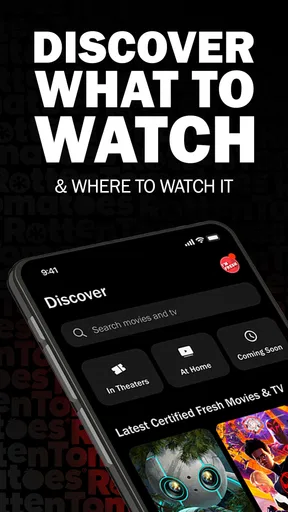
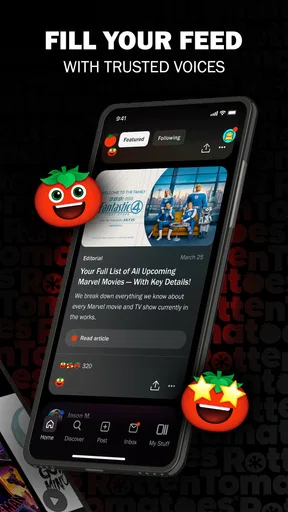
The store summary describes reviews, social features, and news, and that combination is important. The app is not only a score lookup tool. It is intended to keep movie and television discussion in one entertainment-focused place, so I can move from a title’s reception to broader conversation and current coverage without treating each as a separate activity.
That wider scope is helpful when I want to browse rather than search. It can also be distracting if I arrive with one narrow task. An app that combines discovery, commentary, and news naturally asks for more attention than a minimal database. I see that as a trade-off rather than a flaw: the extra context is valuable, but only when I am in the mood to explore.
Where Rotten Tomatoes - Movies & TV wins
The biggest strength is its usefulness at the moment of hesitation. I do not need to know exactly what I want before opening it. A title can be evaluated through several perspectives, and the surrounding editorial and social material can help me decide whether it deserves a place in my evening plans.
The best reason to use it is decision confidence, not endless browsing. When I am choosing between unfamiliar options, the app gives me a recognizable framework for making a quicker judgment. That is especially helpful for people who do not want to read long reviews from many different websites before selecting one film.
It is also a good companion for television discovery. Series decisions carry a larger time commitment than a single movie, so a quick look at reception can be more valuable before I begin. I would use it to identify whether a show is attracting sustained interest, then investigate further instead of relying only on a thumbnail, trailer, or recommendation from an algorithm.
Three smarter ways to use it
My first tip is to use the app comparatively rather than treating each score as an isolated verdict. When two titles are both appealing, I would inspect the reasons for their reception and ask which one better matches the group’s mood. This avoids the common mistake of automatically choosing the higher number without considering genre, tone, or personal tolerance for a particular style.
My second tip is to separate discovery sessions from decision sessions. During a relaxed browsing session, the news and social side can help me notice titles I would otherwise miss. Later, when I need to pick something quickly, I can return with a short list and use the review information more deliberately. This two-step workflow makes the app feel less overwhelming than trying to explore and decide at the same time.
My third tip is to read disagreement as useful information. A divided response can tell me more than a uniformly positive one if I already know what kinds of movies or shows I enjoy. Strong disagreement may signal an unusual style, a demanding pace, or a title that works for a specific audience. I would not dismiss it automatically; I would use the disagreement to decide whether the title’s particular appeal sounds like mine.
A fourth useful approach is to check the app before social plans, not after someone has already chosen a film. If I am hosting, I can prepare a few alternatives and explain why each is being considered. That turns the app into a conversation aid rather than a final authority, which is a healthier way to use any review platform.
Where another category of app may fit better
There are situations where I would choose something else. A streaming-service app is better when the main requirement is immediate playback inside the same place where I browse. A watchlist or diary app is better when I care most about recording personal history, tracking progress, or organizing titles according to my own system. A general news reader may be better for someone who wants entertainment coverage mixed with news from many subjects.
I would also look elsewhere if I dislike public conversation around entertainment. The social side is part of this app’s identity, so a person seeking a quiet, private catalogue may find a simpler title database more comfortable. Likewise, viewers who already have a trusted group of critics may not gain much from another opinion layer unless they want a broader reference point.
That does not make Rotten Tomatoes - Movies & TV a weak choice. It simply means its value depends on the stage of the viewing journey. It is strongest before watching, when I am comparing possibilities and looking for context. It is less compelling as the only app I use for playback, personal archiving, and detailed media management.
Small points of friction I noticed
The breadth of the experience can make the app feel busier than a purpose-built search utility. Reviews, social material, and news each compete for attention, and someone who only wants a fast answer may need to ignore parts of the experience. I would not install it expecting every screen to serve the same narrow purpose.
Another limitation is the risk of overtrusting an aggregate reaction. No score can tell me whether I will enjoy a specific performance, pacing choice, or ending. The app helps me reduce uncertainty, but it cannot replace knowing my own taste. If I use it as a command rather than a guide, I may skip films that would have suited me.
The Teen content rating is also worth taking seriously for families. I would not assume that an entertainment discovery app is automatically appropriate for younger children simply because it discusses movies and television. Parents should treat the rating as a reason to supervise how younger users browse entertainment-related material.
What switching to it actually involves
Moving from a browser-based routine is easy if my habit is simply searching a title and checking its reception. The main adjustment is learning to use the app as a destination for ongoing discovery rather than opening it only for one lookup. I would begin with titles I already know, compare how the review and social elements are presented, and then test whether the news side adds value to my routine.
There is little reason to abandon every other entertainment tool immediately. I would keep a streaming app for playback and use Rotten Tomatoes - Movies & TV before deciding what to open there. This combination avoids forcing one app to do every job. The cost of switching is therefore mostly a change in habit: remembering to consult a review-focused source before starting a title, rather than relying on the first recommendation that appears in a streaming interface.
Because the app is free, trying that workflow is straightforward. Still, free does not mean frictionless. The real cost is attention. If I already feel overloaded by entertainment recommendations, adding another feed may make choosing harder instead of easier. In that case, I would use it only for specific decisions and avoid treating the news and social areas as something I must check regularly.
Compatibility, maturity, and current footing
The app requires Android 8.0 or later, so I would check the operating system on an older phone before planning around it. It is currently at version 1.1.0, which places the experience in a relatively early stage of its release path. I would keep expectations practical: the core decision-making value is clear, but early versions can still feel like an experience that is being refined.
Rotten Tomatoes - Movies & TV was released on October 9, 2025, and it has already passed 100 thousand installs. That gives it a meaningful initial audience without making popularity a substitute for personal usefulness. I would judge it by whether its review, social, and news mix improves my own choices, not simply by how many people have downloaded it.
The developer is Fandango, a name closely associated with moviegoing and entertainment discovery. That context makes the app’s focus feel coherent: it is built for people who want to stay close to films and television while deciding what deserves their time. The free price also makes it easy to test without turning the decision into a financial commitment.
My recommendation for different kinds of viewers
I recommend it to people who regularly ask friends for movie opinions, enjoy comparing reactions, or want a faster way to screen unfamiliar films and series. It is particularly useful if I want a single entertainment-focused place for reviews, social discussion, and news, and if I am comfortable making the final decision after considering several signals.
I would skip it as a primary choice if I only want playback, a private viewing diary, or a highly controlled personal catalogue. In those cases, a streaming app, tracking tool, or simpler database will probably fit better. I would also avoid building my entire taste around its scores. The app is most helpful when it informs my judgment, not when it replaces it.
After using it, my view is positive but specific: this is a decision companion, not an all-purpose home for every part of entertainment. Its strongest feature is the way it helps turn “Should I watch this?” into a more informed question. Its weaker side is the possibility of extra browsing when I only wanted a quick answer.
My clear recommendation is to try it if reviews and entertainment conversation influence what you watch. Keep your streaming service for viewing, use this app to compare options and understand the reaction around them, and pay attention to disagreement instead of following a score blindly. For that role, Rotten Tomatoes - Movies & TV earns a place on my phone; for every other role, I would pair it with a more specialized alternative.
Pros
- Quick access to critic and audience scores in one place.
- Useful filters help discover movies and shows by genre or rating.
- Trailers
- cast details
- and release information support viewing decisions.
- Personalized recommendations can make browsing easier.
- Fresh reviews and entertainment news keep the app regularly updated.
Cons
- Some features and content may vary by country or region.
- Streaming availability can be incomplete or occasionally outdated.
- The interface includes advertising and promotional content.
- Scores may oversimplify complex opinions about a movie or show.
- Some links redirect to external services or require separate subscriptions.
FAQs for Rotten Tomatoes - Movies & TV
What is Rotten Tomatoes – Movies & TV used for?
Rotten Tomatoes – Movies & TV helps you discover movies and television shows, check critic and audience ratings, read reviews, watch trailers, and find information about casts, genres, release dates, and where titles may be available to stream or rent. It is especially useful when you want a quick overview of reception before deciding what to watch, although availability and features can vary by region.
Are the ratings and reviews on Rotten Tomatoes reliable?
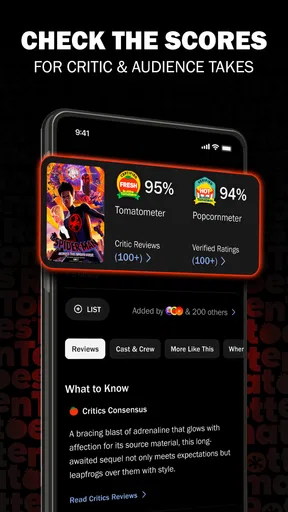
Rotten Tomatoes provides two main perspectives: the Tomatometer, based on approved professional critics, and the audience score, based on user ratings. These scores are useful indicators, but they should not be treated as absolute judgments. A high score does not guarantee that a title matches your personal taste, and some films may have limited reviews or audience participation, which can affect how representative the rating is.
Can I watch movies and TV shows directly in the Rotten Tomatoes app?
The app is primarily designed for discovery and information rather than serving as a complete streaming platform. Depending on your location, it may show services where a movie or show can be streamed, rented, or purchased, and may provide links to those providers. You will generally need a separate subscription or account with the selected streaming service, and listed availability can change over time.
Does Rotten Tomatoes – Movies & TV require an account or subscription?
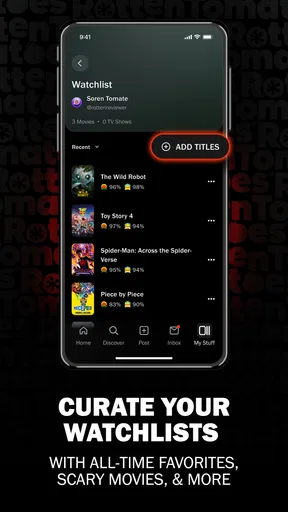
You can usually browse ratings, entertainment news, trailers, and title information without paying for a subscription. Creating an account may provide additional conveniences, such as saving movies and shows, managing preferences, or interacting with audience features, depending on the current version of the app. Some functions may require sign-in, while third-party streaming services can require their own paid plans.
Is Rotten Tomatoes – Movies & TV suitable for finding new content to watch?
Yes, the app can be helpful for discovering new releases, popular titles, critically acclaimed films, television series, and content organized by genre or interest. Its ratings and editorial information make it easier to narrow down choices, while trailers and cast details provide additional context. However, recommendations may not always reflect your individual preferences, so checking the synopsis and user feedback is still worthwhile.


